
FROM THE DESK OF PERRY BELCHER
Think about this for a minute.
What if you could walk into a business, identify a problem the owner is already spending money trying to solve, and show him an AI system designed to handle that work?
You charge to install it.
Then you charge to manage and maintain it.
And once you've earned that client's trust, you look for the next problem you can solve.
One customer. More than one service. The potential for multiple streams of recurring revenue.
Now look at the same opportunity from the other side of the desk.
What if you own the business?
You're trying to keep up with customer calls, sales follow-up, marketing, administrative work, and employees who already have more on their plates than they can handle.
You don't necessarily want to start an AI agency.
You want to know which of those jobs AI could help your company get done.
Same systems. Two very different ways to benefit.
That's what AI Bot Summit 6 is built around.
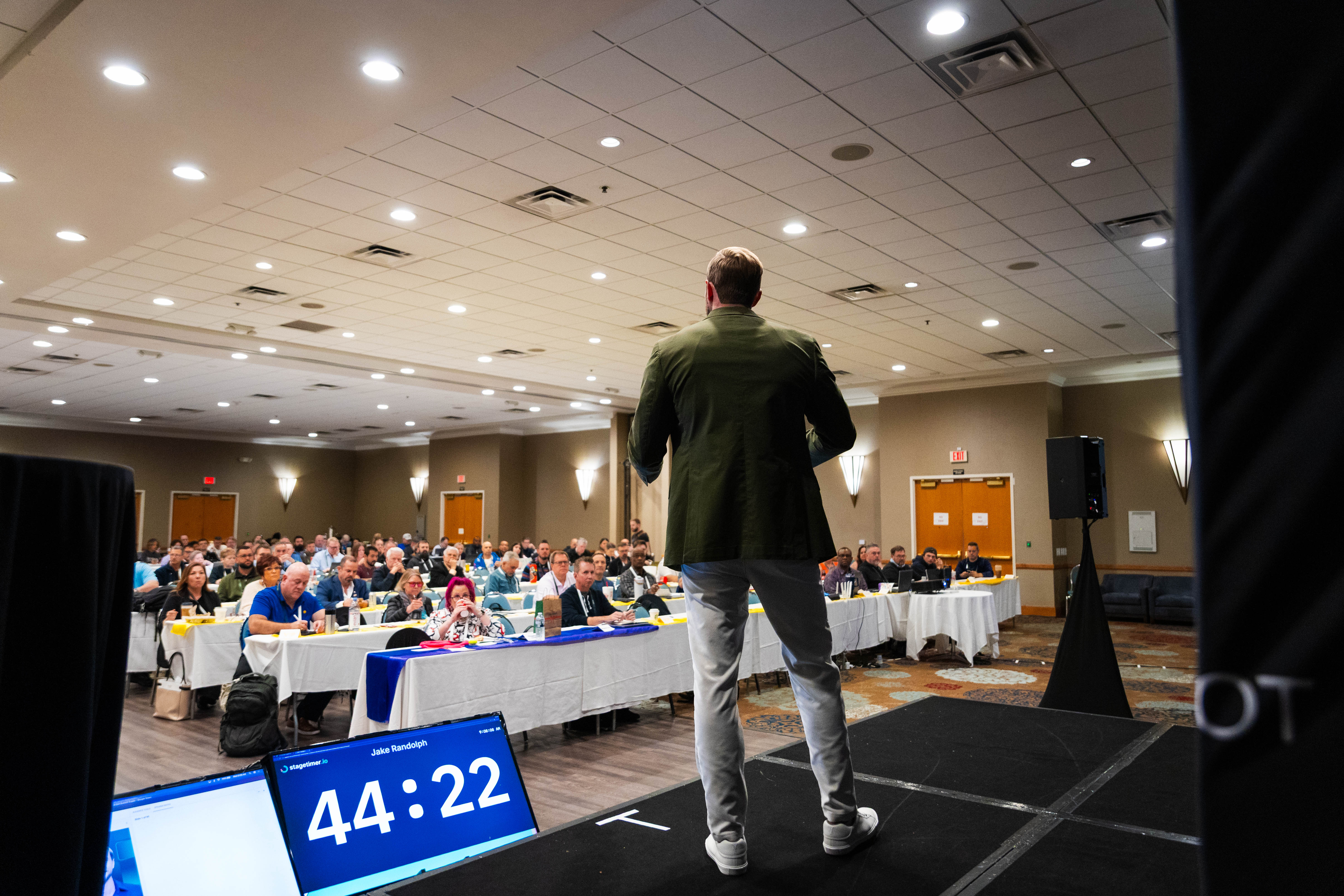
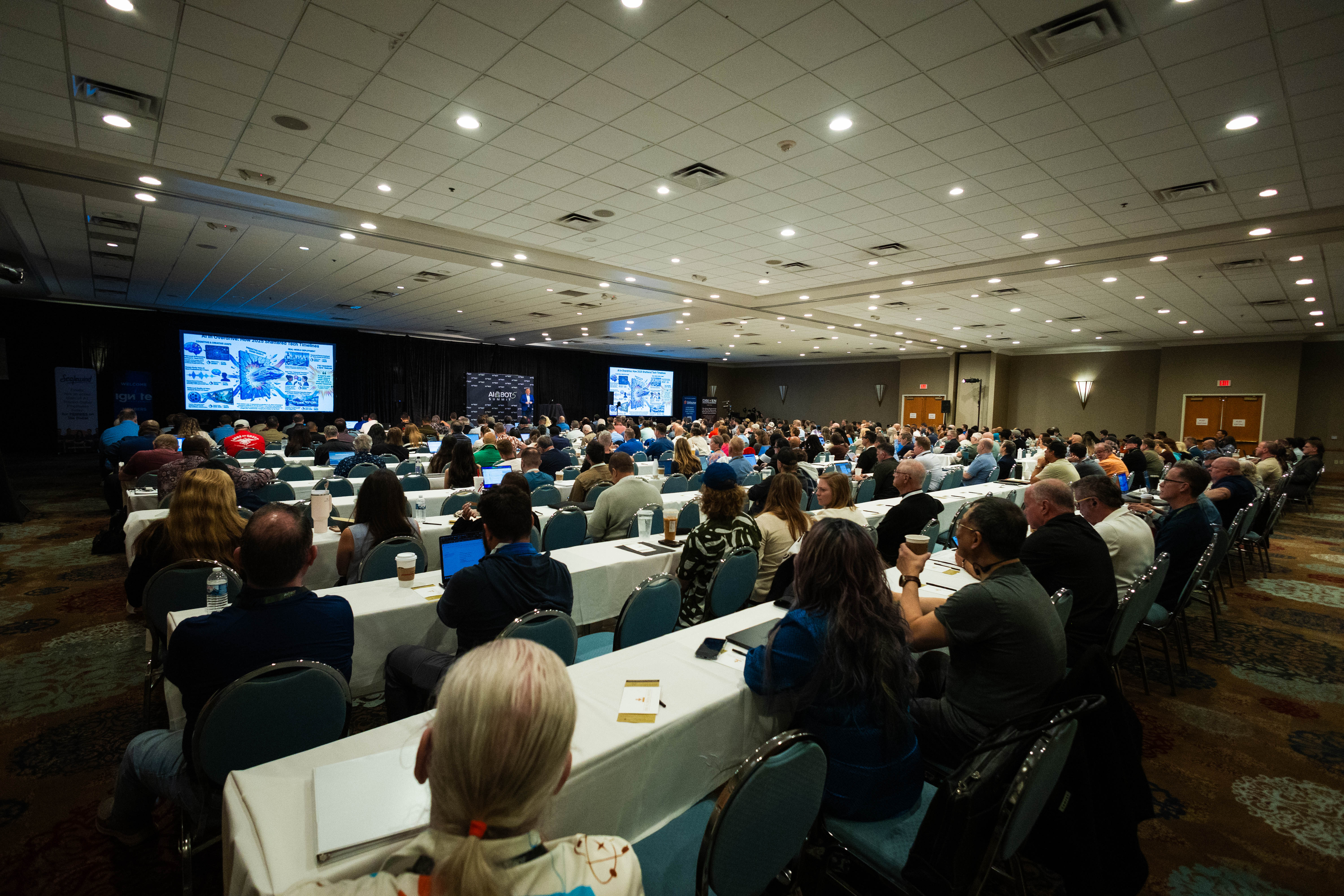
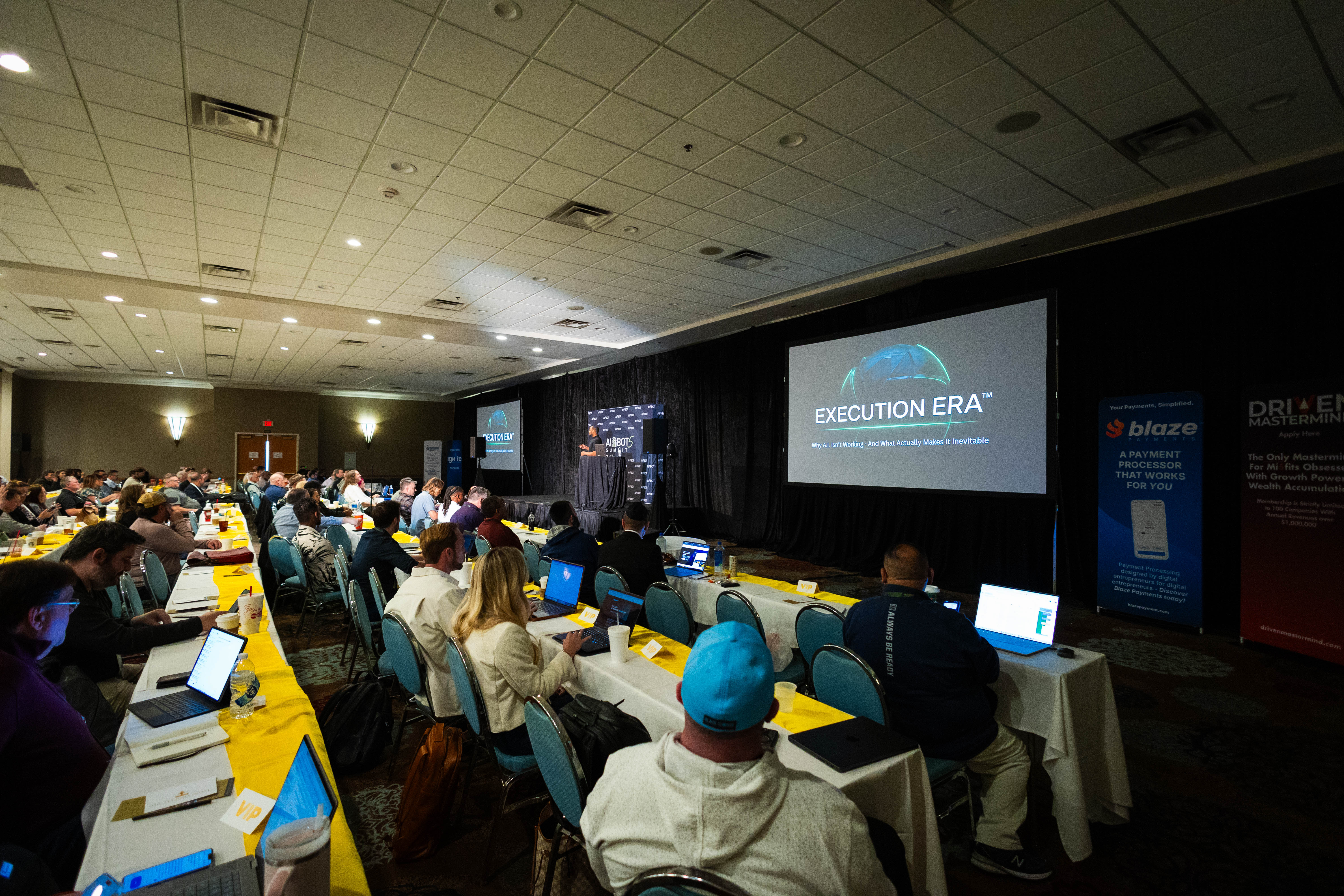
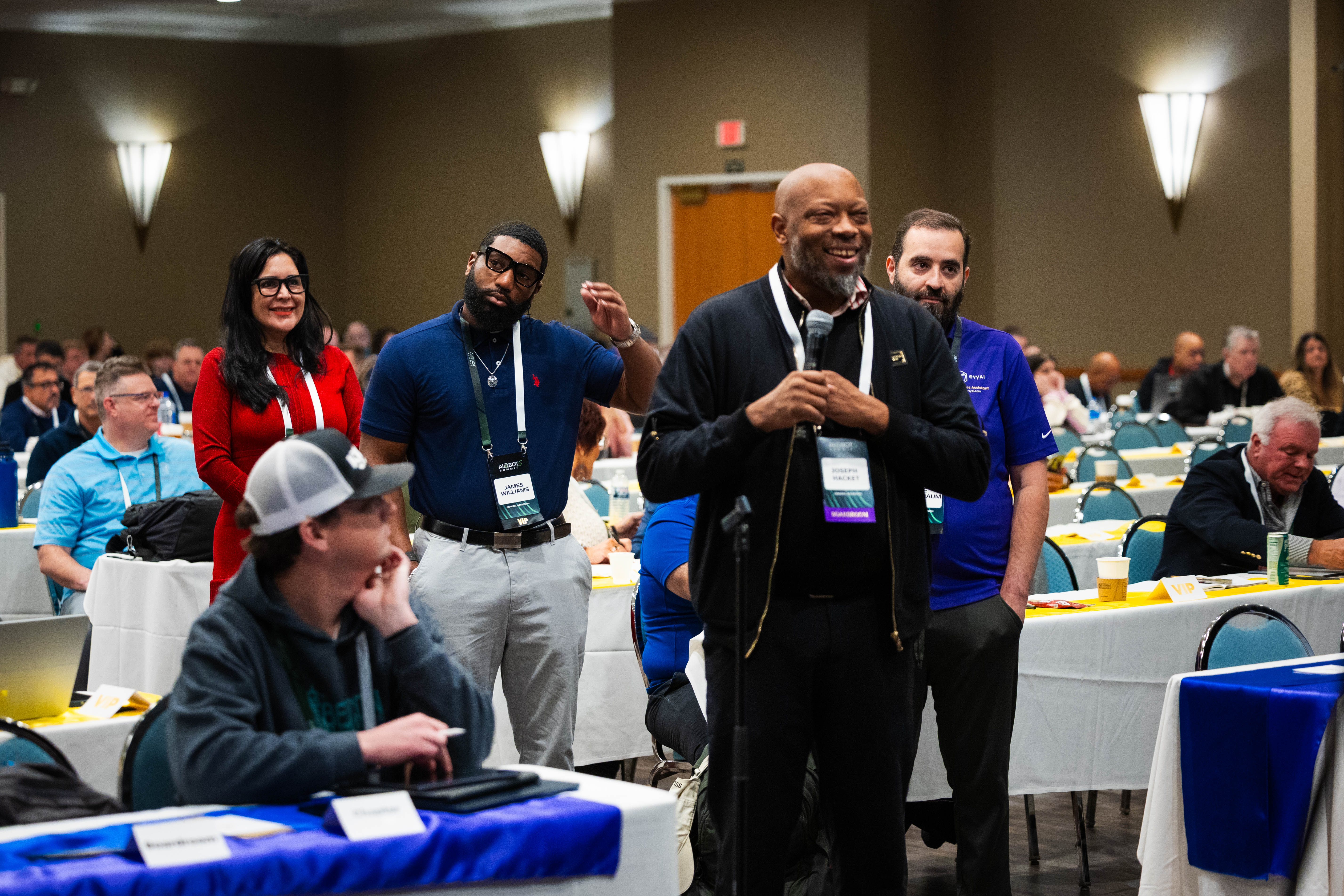
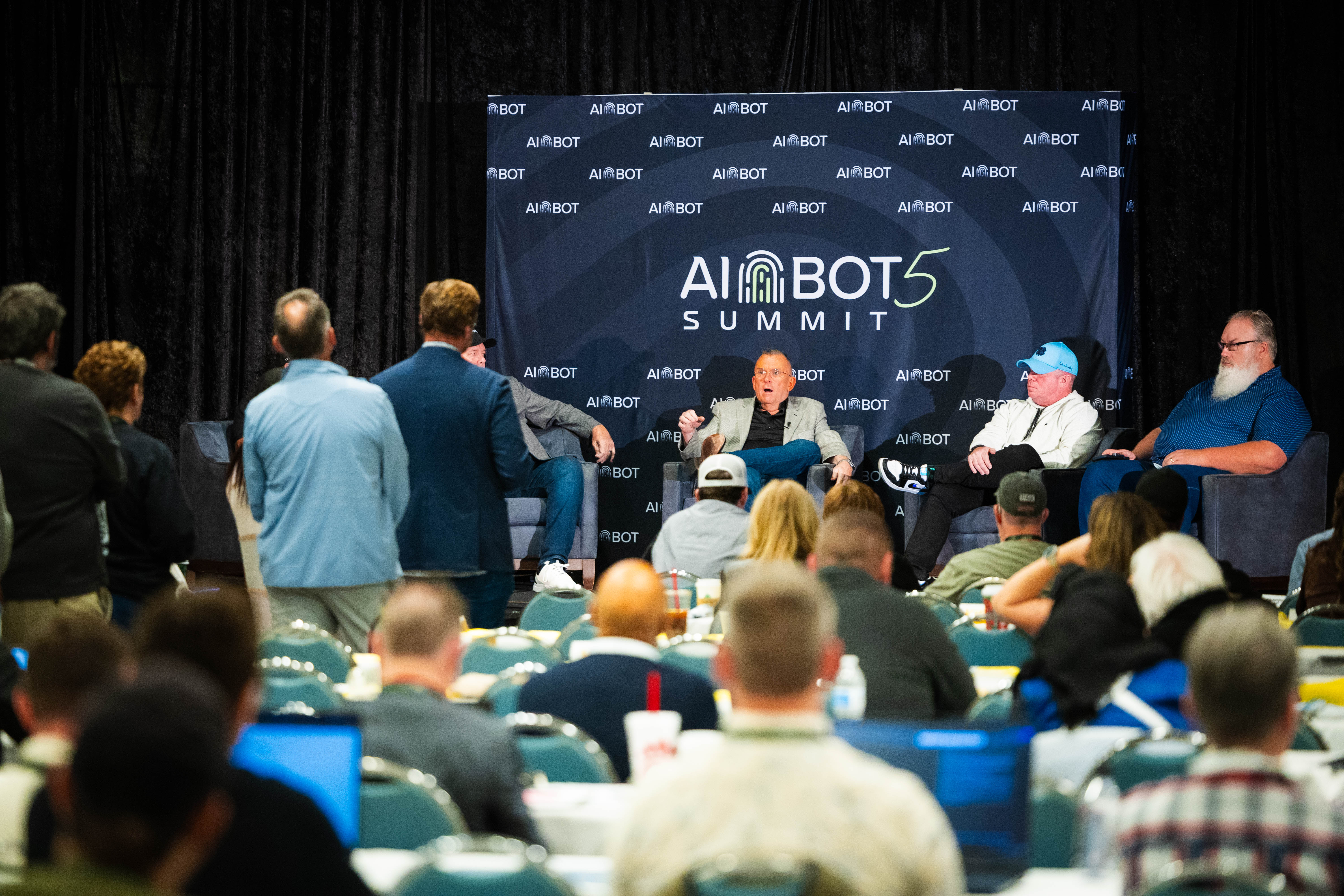
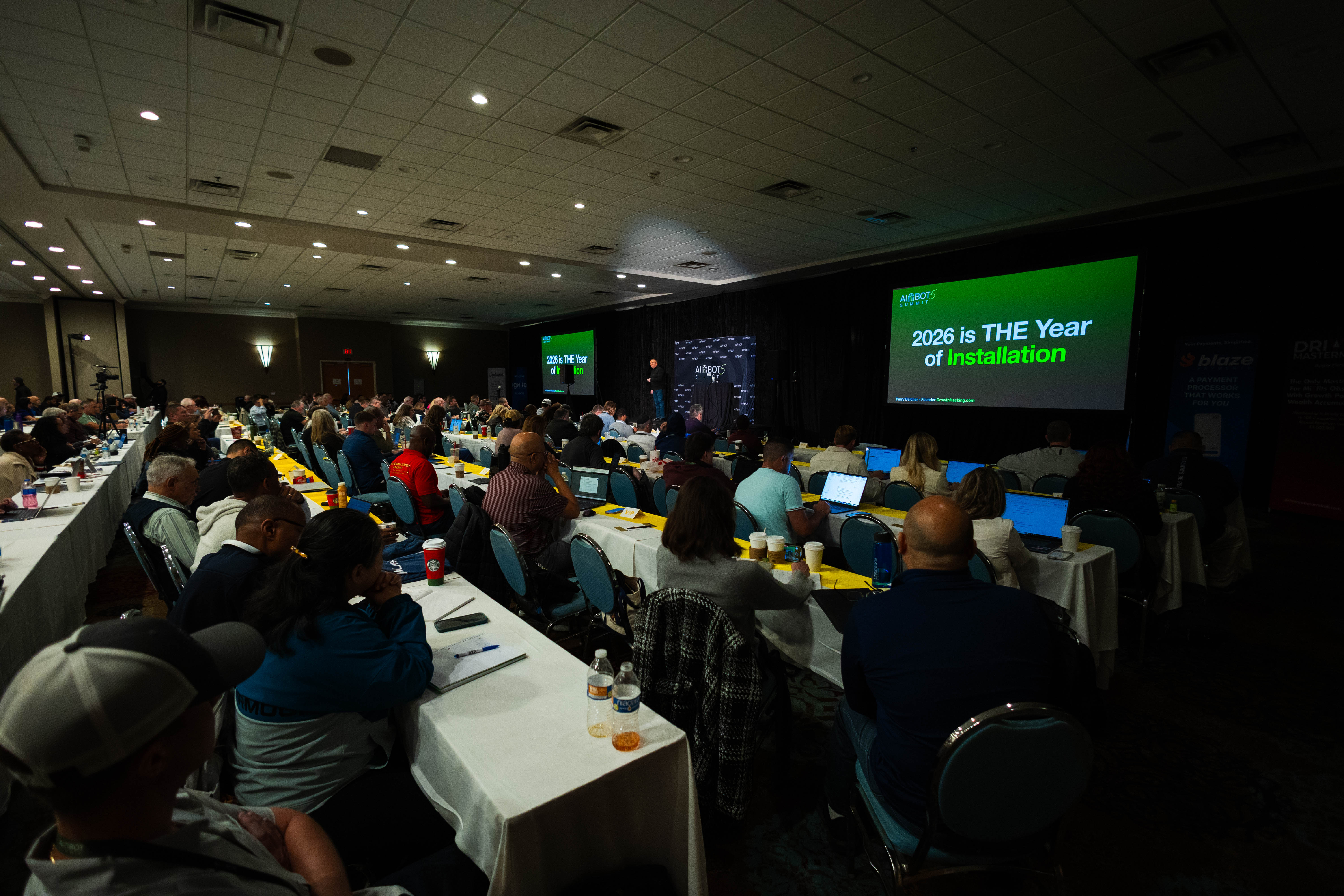
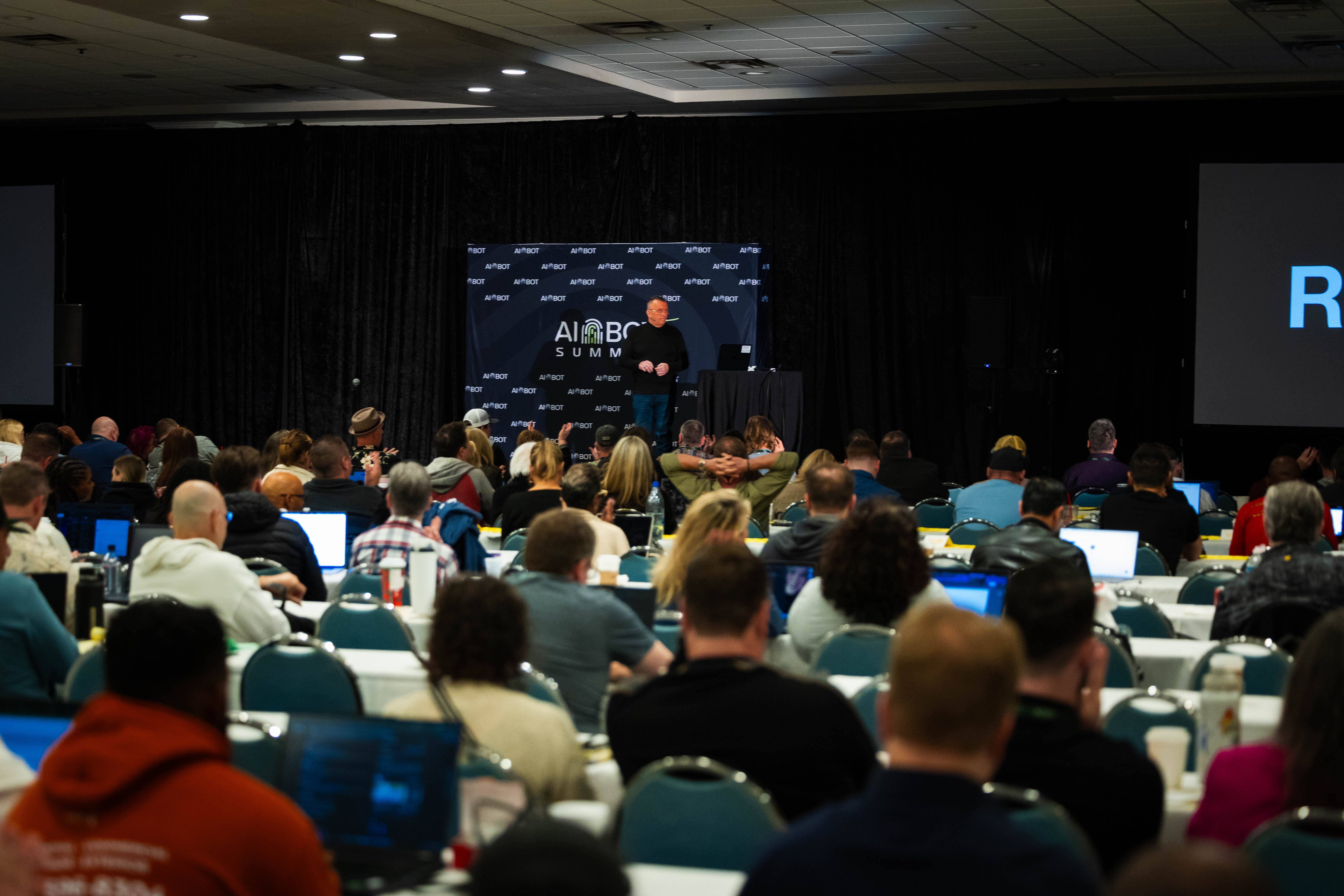
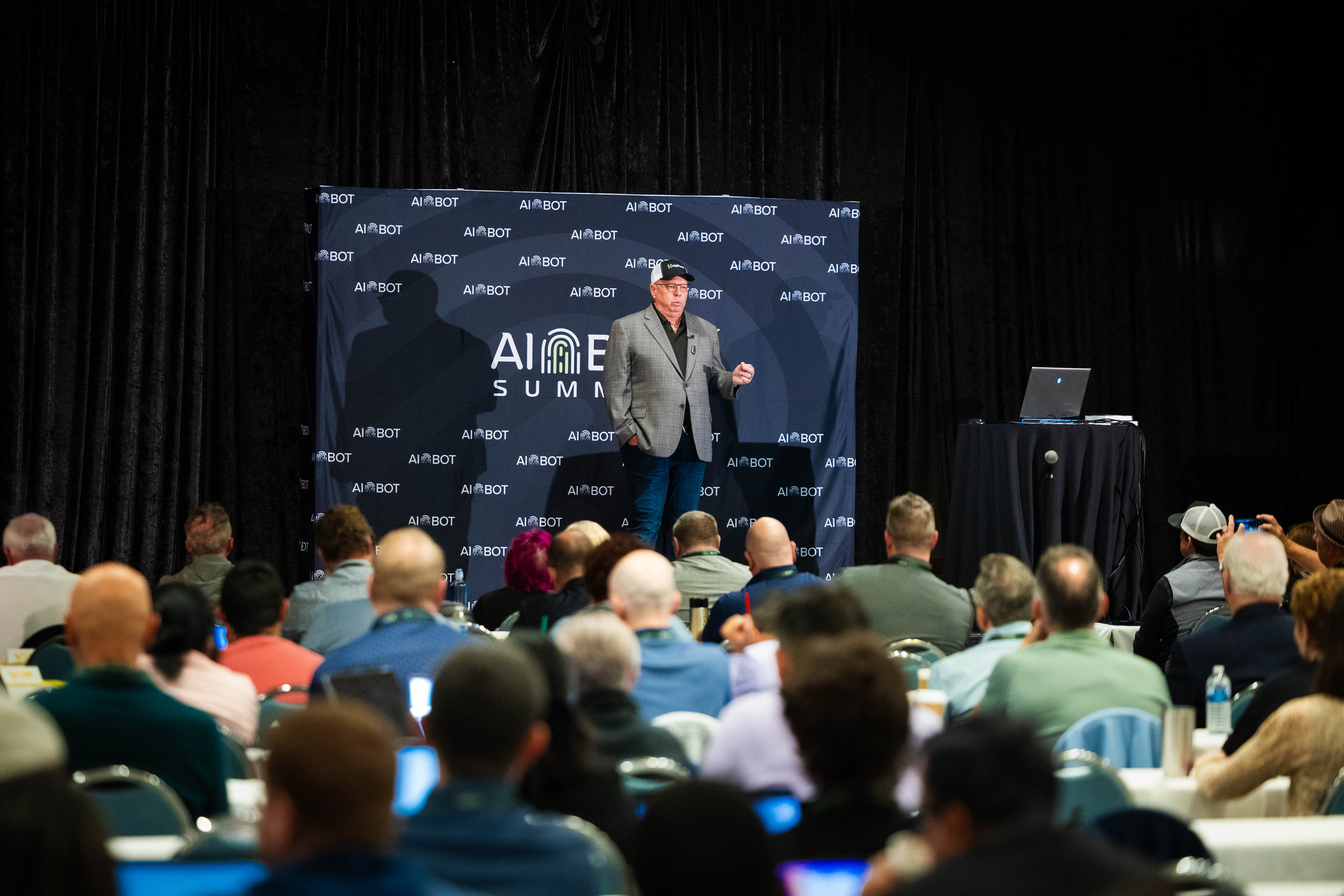
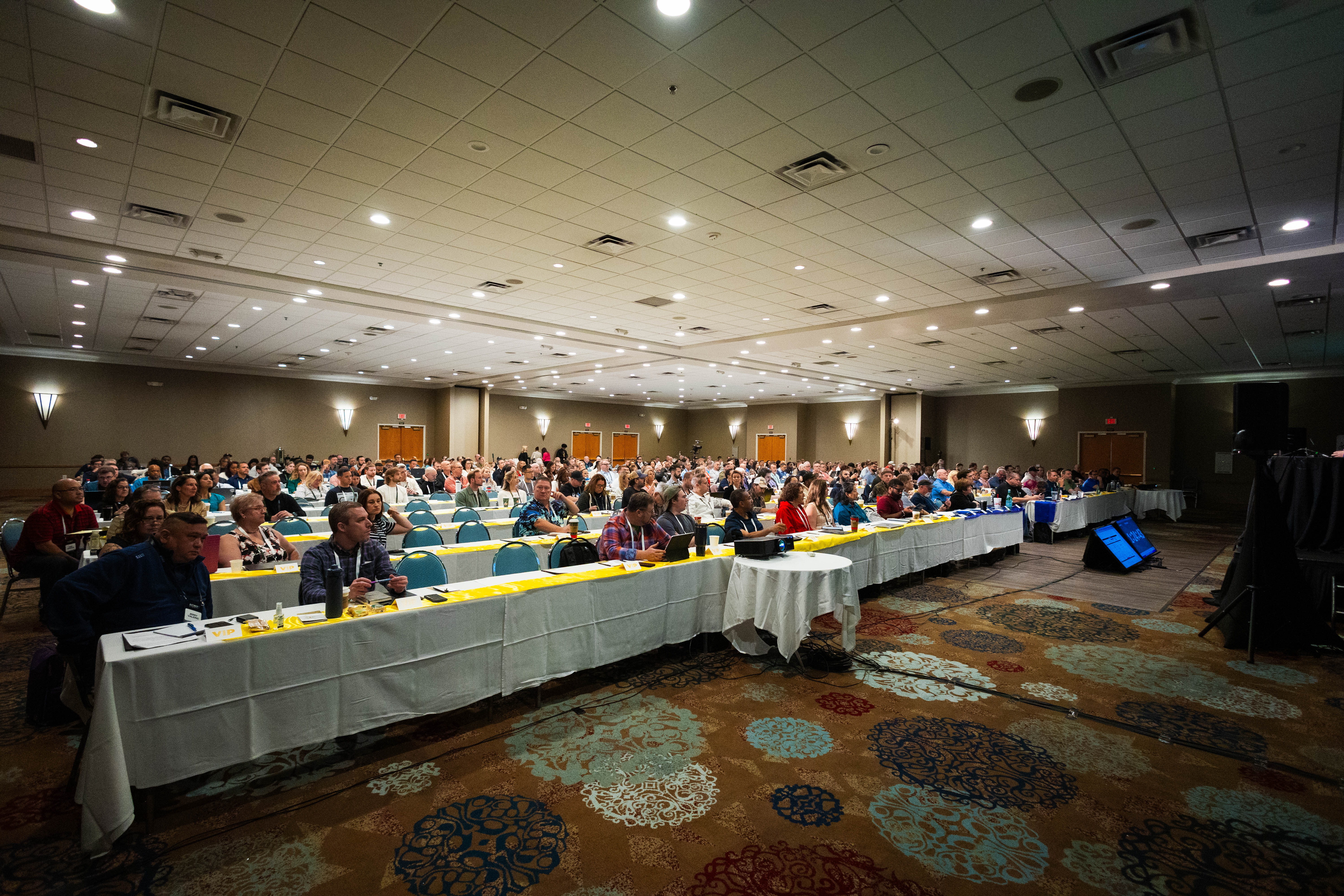
For three days in Orlando, 12 AI business operators are going to build 12 different AI systems live onstage.
You'll see what they do, how they're built, who needs them, and how the operators approach selling and delivering them.
And Perry Belcher will teach the Ghost Method, showing how these individual systems can fit into a larger commercial strategy.
- You don't need to be a programmer to attend.
- You don't need to already own an agency.
- And you don't need to figure out all 12 businesses.
You just need to discover the ONE that makes the most sense for you.
People are already turning AI knowledge into real business activity.
Not because they collected the most software subscriptions.
Because they started looking for useful things they could actually build.
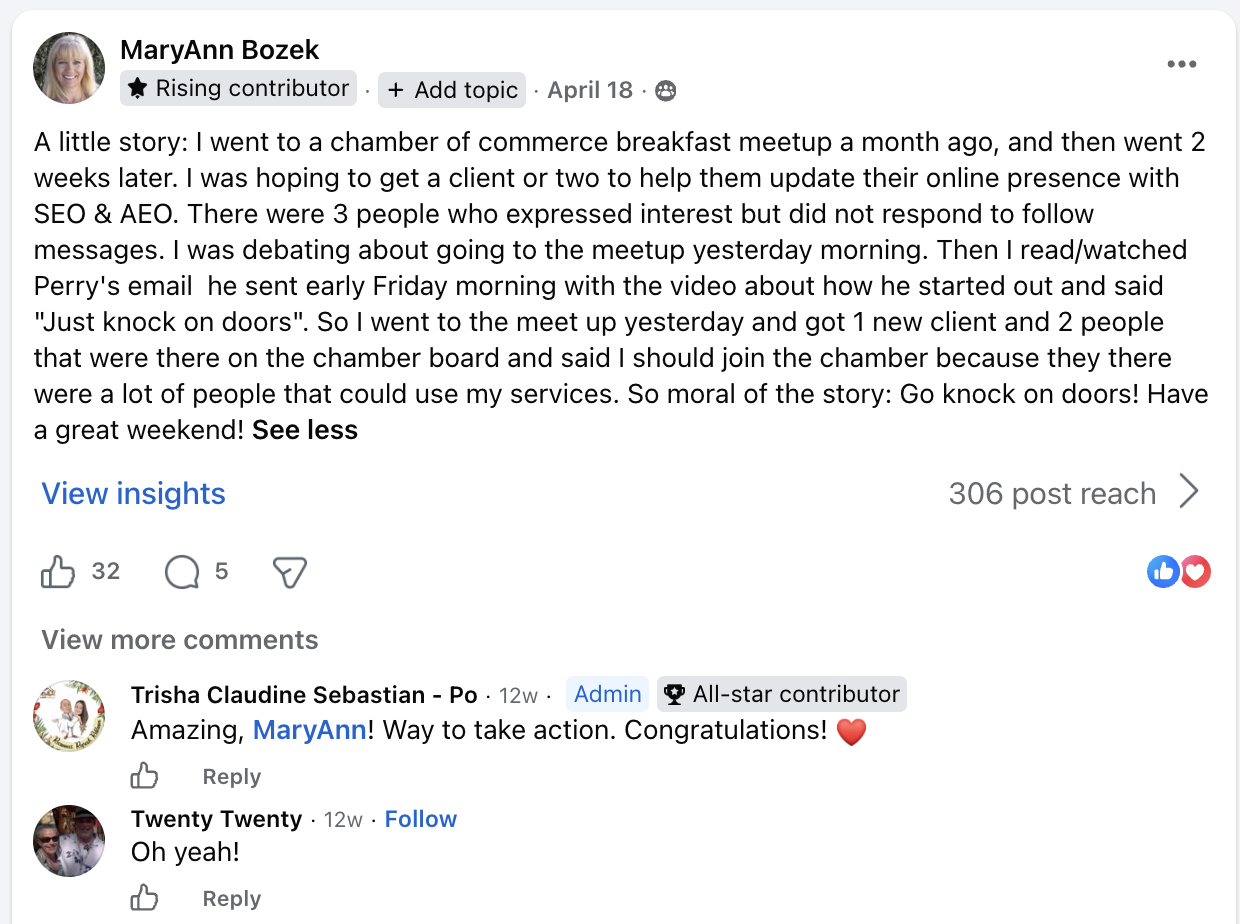
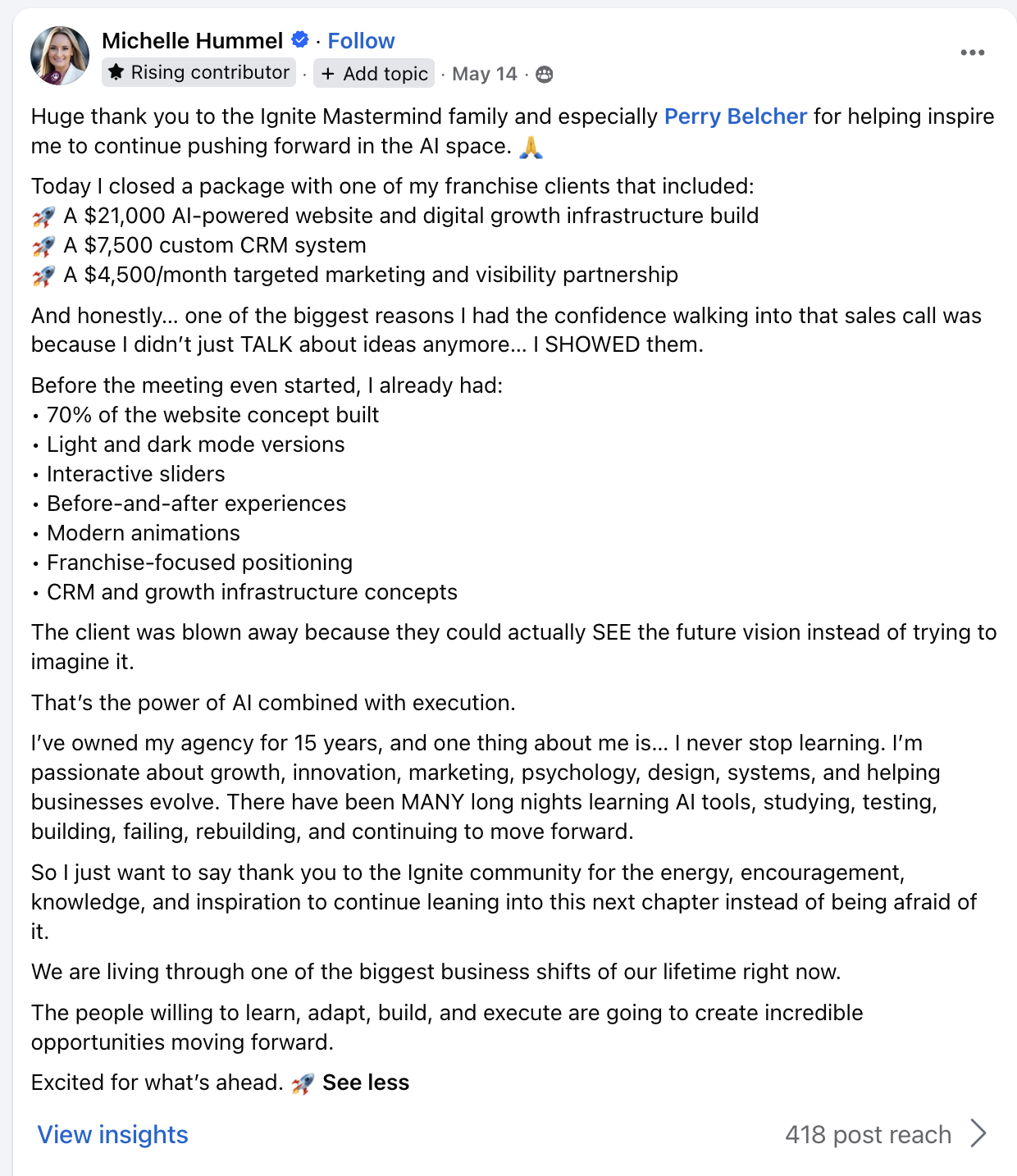
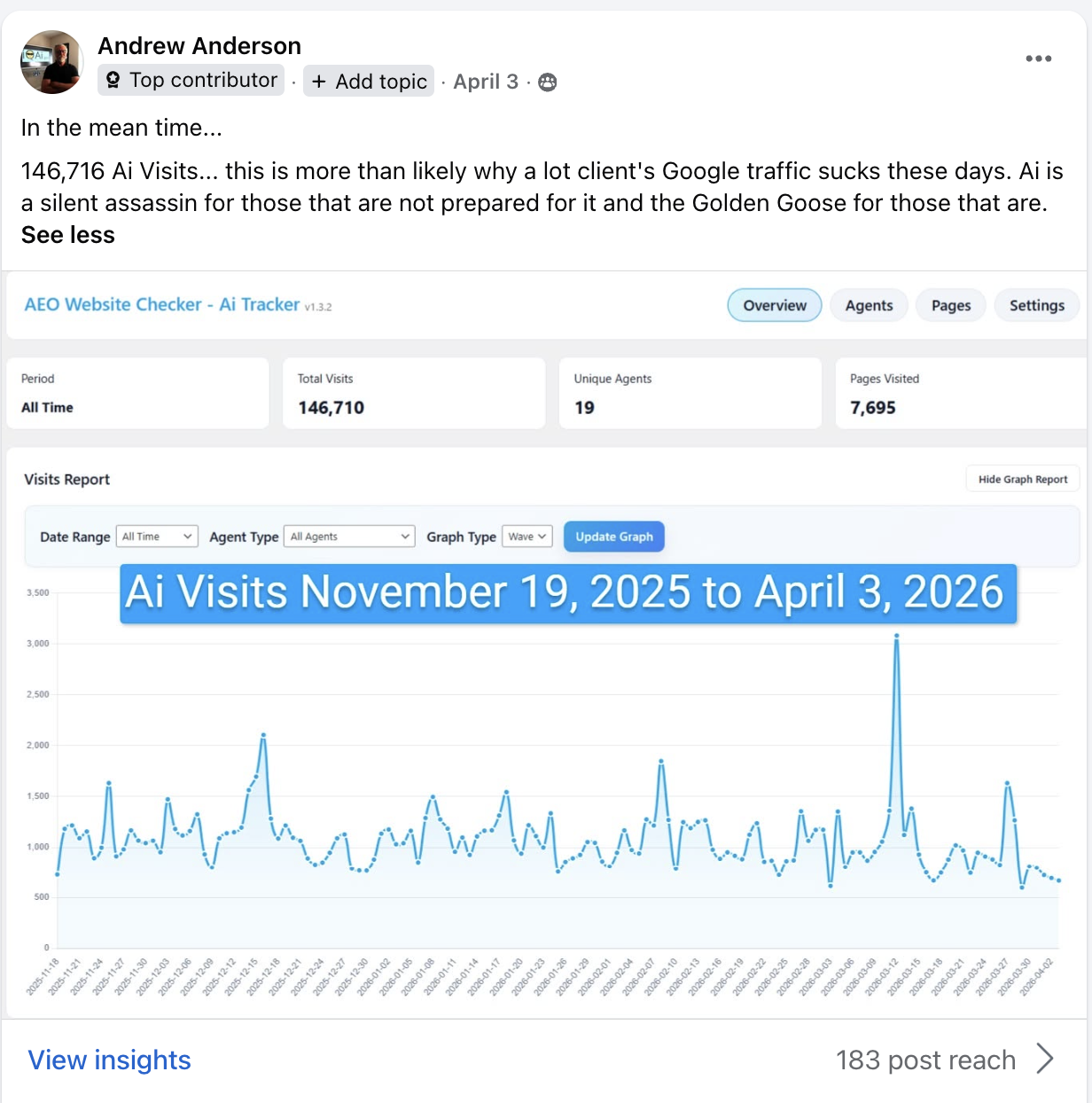
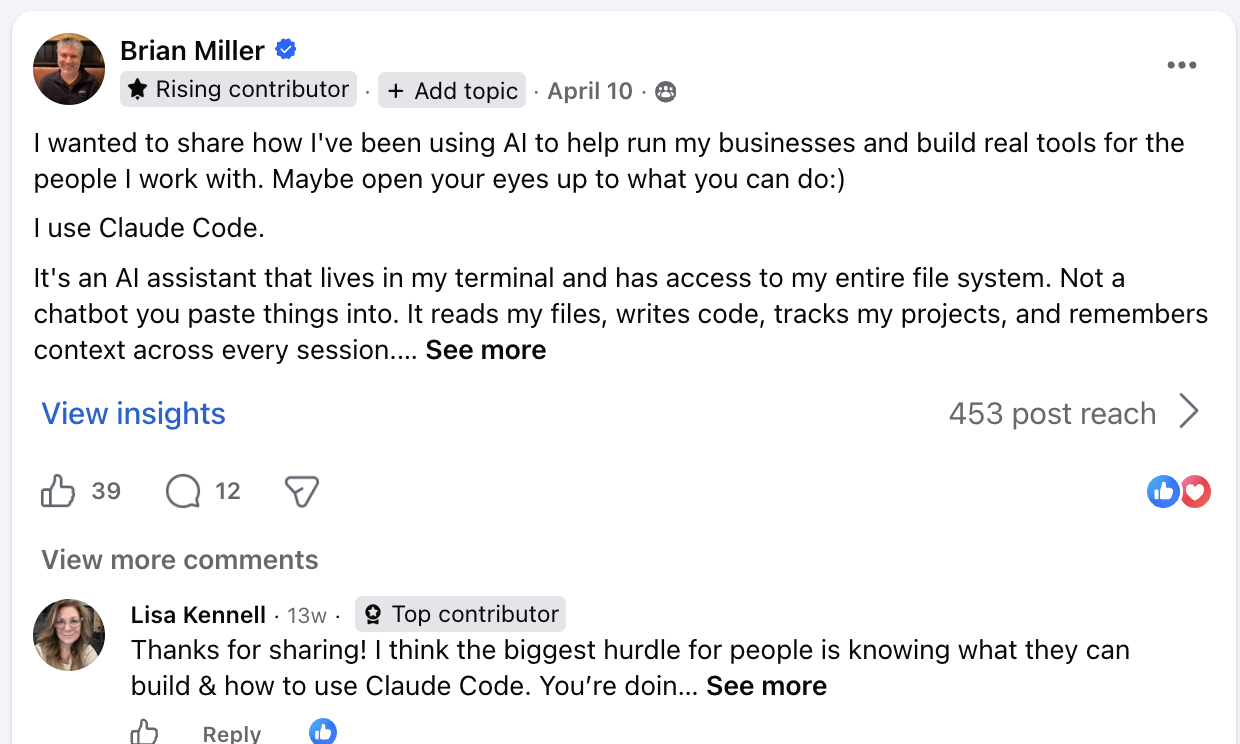
Take a look at these examples from Perry's AI and business community.
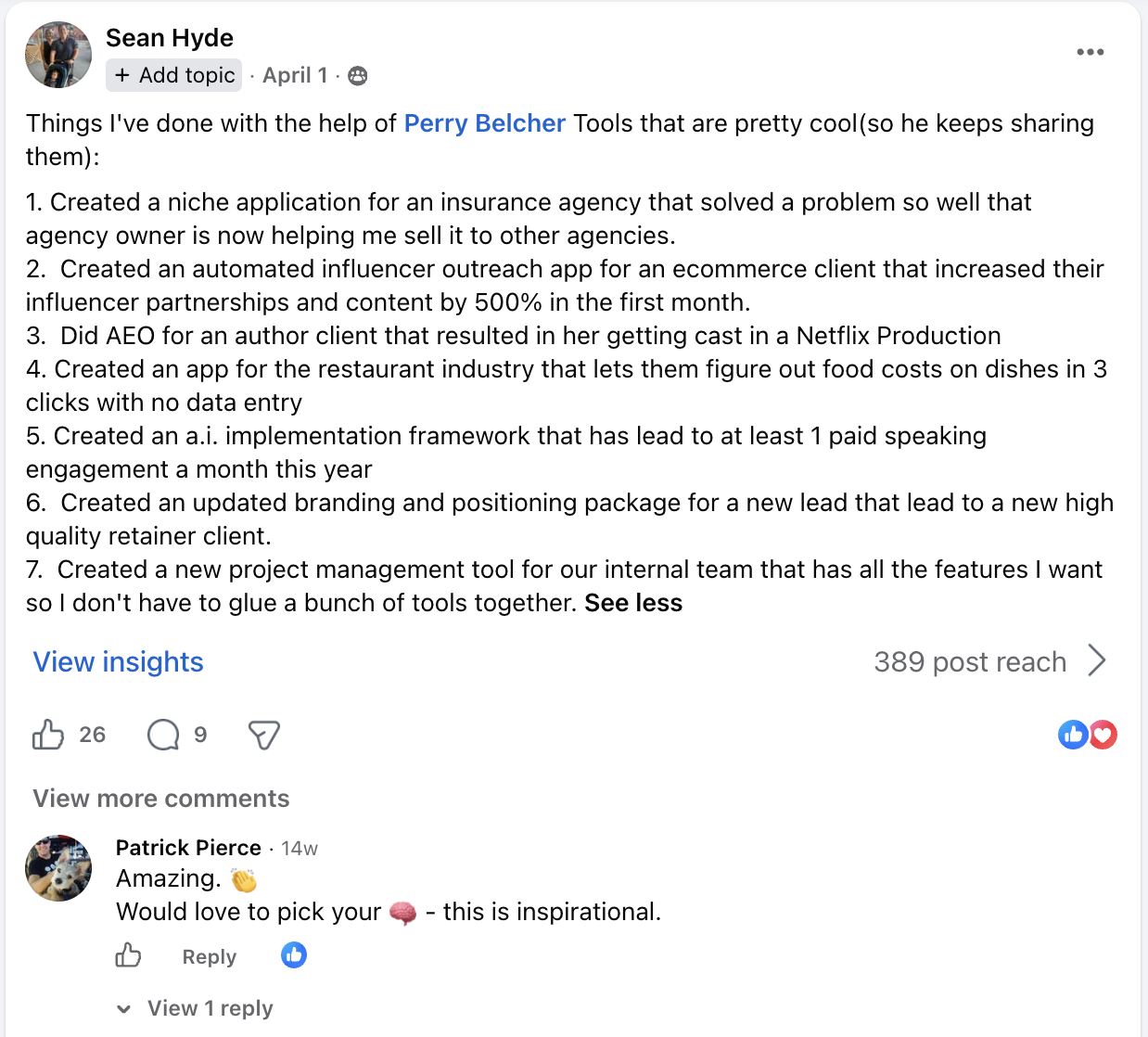
SEAN HYDEAI SYSTEMS APPLIED TO REAL BUSINESS TASKS
Sean has shared work involving automated influencer outreach and an AI ordering system for restaurants.
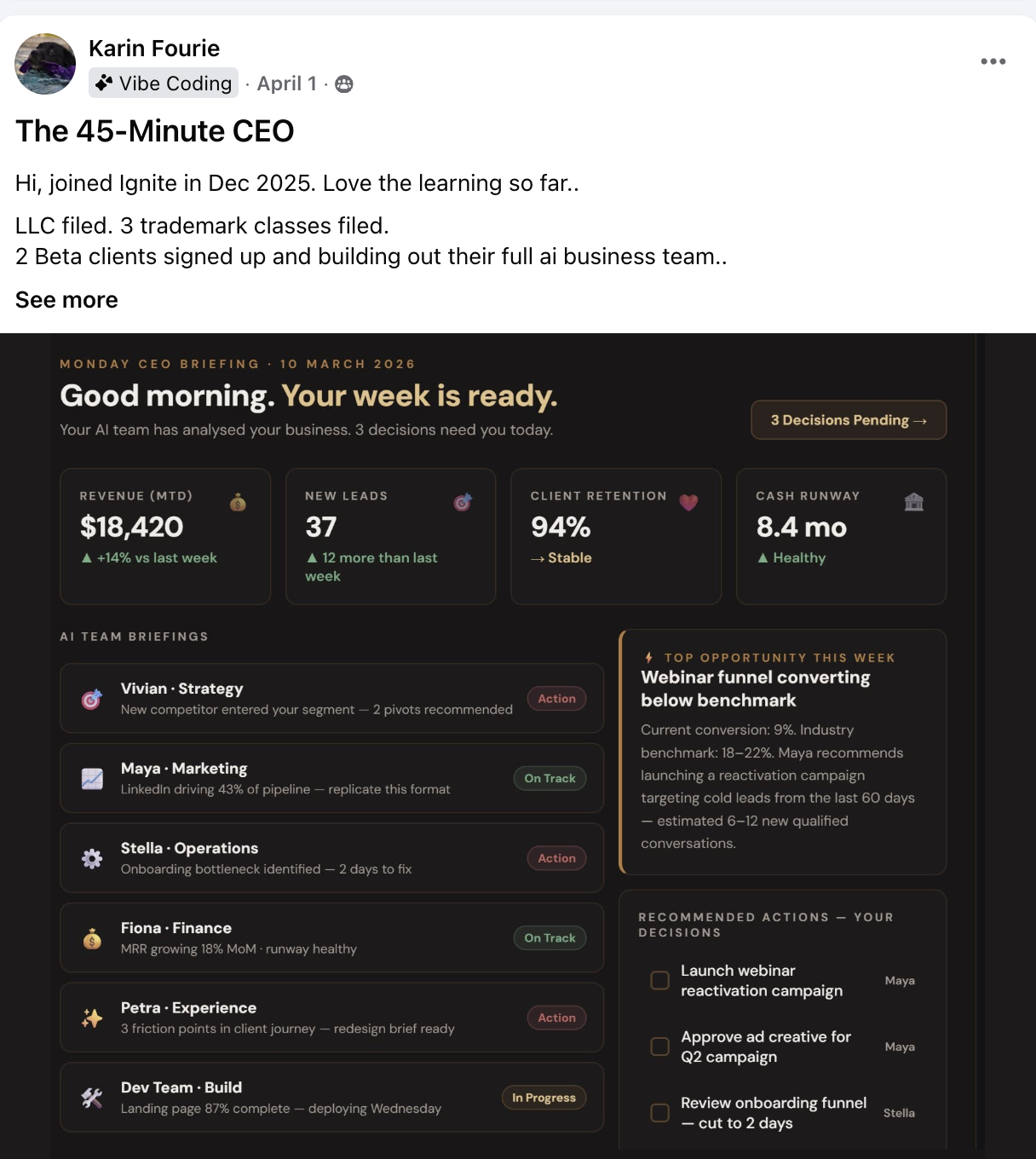
KARIN FOURIETWO BETA CLIENTS
Karin reported signing up two beta clients while developing her AI business.
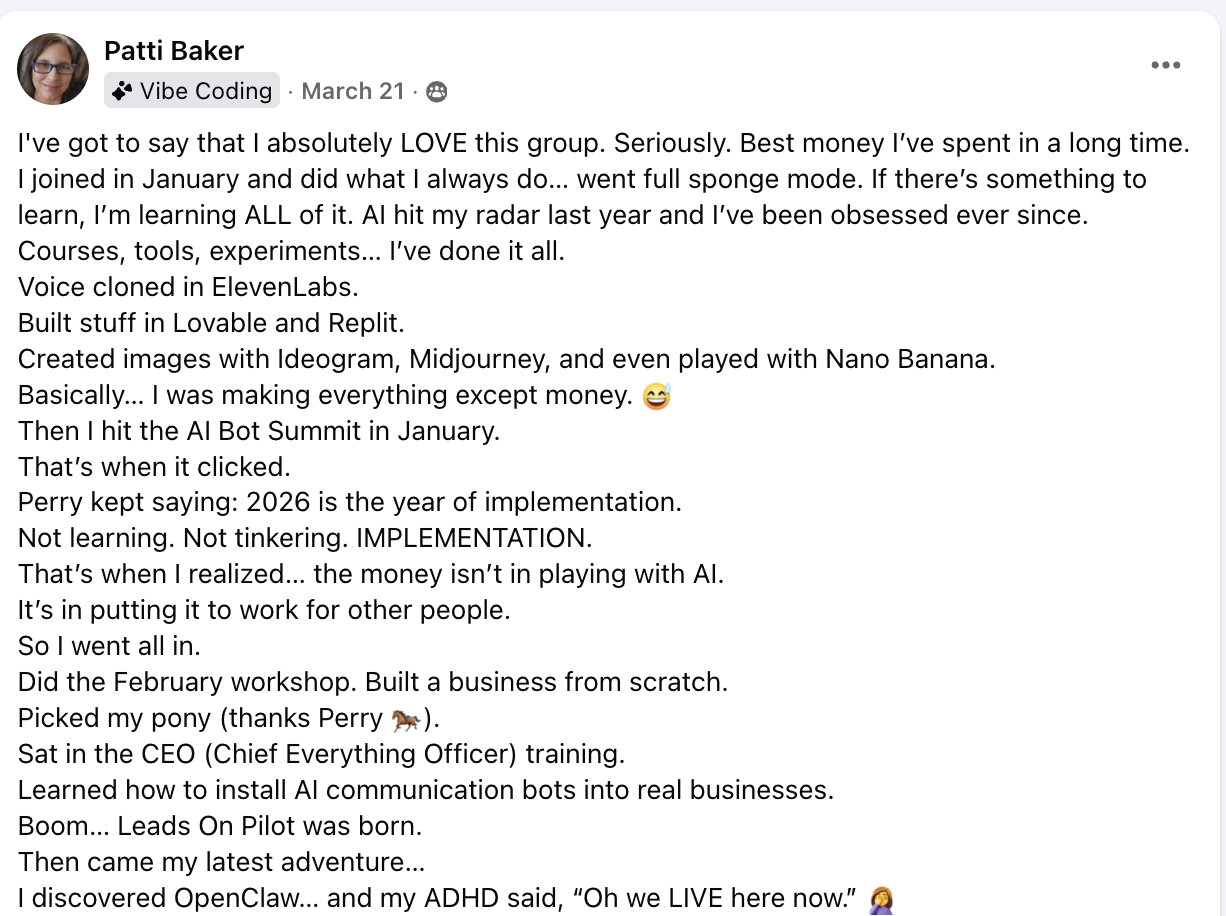
PATTI BAKERFROM LEARNING AI TO IMPLEMENTATION
Patti shared that AI Bot Summit helped shift her focus from learning and experimenting with AI to implementing what she had learned.
These examples come from Perry's wider AI and business community, not necessarily from AI Bot Summit attendees. Individual results are not guaranteed.
These are different people working on different problems.
But there's something connecting them.
They moved beyond asking what AI can do and started exploring what they could do with AI.
And that brings us to the problem most people never get past.
Knowing how to use AI doesn't mean you know what to sell.
You can learn how to build a chatbot.
That doesn't tell you who will buy it.
You can create an AI voice agent.
That doesn't tell you how much somebody will pay to have it installed.
You can connect a dozen automations.
That doesn't mean you've created a service a business owner needs.
And if you're already running a company, knowing that AI can automate something doesn't tell you whether it's worth automating.
You still have to answer four questions.
What problem are we solving?
How does the system work?
What is that solution worth?
And how do we get someone to buy it—or decide whether to use it ourselves?
That's why every agency presentation at AI Bot Summit 6 is designed around four things: the business model, the live build, the pricing approach, and how to get customers. All 12 speakers will build their systems live, and Perry will connect the lessons through the Ghost Method.
1. The business model
Learn what the service does, what business problem it addresses, and which customers need it.
2. The live build
Watch every operator build an AI system live onstage. See how the parts come together and what the implementation involves.
3. The pricing
Learn how the operator approaches pricing the service, including installation and ongoing support where applicable.
4. Finding customers
Learn how the operator approaches identifying prospects, positioning the solution, and getting customers.
But there's a bigger lesson behind those four questions.
One that completely changes how I think an AI service should be presented to a business owner.
And it starts with something I want you to stop doing.
Stop selling AI.
Start selling work that businesses already need done.
Here's a mistake I see AI service providers making.
They walk into a business and start talking about automation platforms, AI models, agents, and all the things the technology can do.
Meanwhile, the owner sitting across the desk is wondering:
"What's this going to cost me?"
"And what problem is it actually going to fix?"
He's got employees to pay.
Customers to deal with.
Phones ringing.
Work backing up.
He doesn't need another technology lecture.
He needs somebody to help him get a job done.
That's the thinking behind what I call the Ghost Method.
What is a ghost?
Picture a plumbing company.
Three trucks on the road.
A busy office.
And a phone that doesn't stop ringing.
When everybody's busy, some calls go unanswered.
When customers contact the company after hours, nobody may respond until the next morning.
Some of those potential jobs disappear.
Now imagine showing that owner an AI-powered system that can answer routine inquiries, collect the information needed to respond, and help schedule service appointments.
It handles defined work.
It involves the team when human judgment is needed.
And it gives the business another way to manage customer inquiries.
The owner doesn't need to understand the AI behind it to understand the problem you're solving.
He knows what missed calls cost his business.
He knows what extra staffing costs.
And he can evaluate whether your solution is worth paying for.
That's the Ghost Method.
Instead of leading with technology, you lead with a responsibility the business needs handled.
Here's how you can get paid.
First comes the installation.
You identify the problem, build the system, connect it to the business's workflow, test it, and get it ready to use.
That's a service you can charge to deliver.
Then comes the ongoing work.
The system may need monitoring, updates, adjustments, and support.
You can charge a monthly management fee for providing that service.
An installation fee to get started. Recurring revenue for ongoing service.
But here's the part that makes having 12 different agency models so interesting.
The first ghost doesn't have to be the last.
Let's go back to our plumbing company.
You helped the owner handle incoming inquiries.
The system is working.
He's satisfied.
Then he tells you something else.
His office sends estimates, but nobody consistently follows up with people who haven't responded.
That's another problem. And maybe another service.
Later, he needs help producing marketing content.
Then better reporting.
Then a more efficient way to handle recurring administrative tasks.
One business can have several problems worth solving.
And once you've established a good relationship, you may have opportunities to provide more than one service.
You don't necessarily need a new customer every time you want to create another source of revenue.
Now think about that from the business owner's perspective.
You're not interested in collecting placement fees.
You're interested in getting work done efficiently.
You might start by using AI to help handle incoming customer questions.
Once you've measured the results, you look at sales follow-up.
Then marketing.
Then operations.
One problem at a time. One system at a time.
That's why I don't want you coming to this summit expecting to master 12 businesses in three days.
I want you to see 12 possibilities and recognize which one gives you the best place to start.
And that's a lot easier when you can watch the people who work with these systems actually build them.